
Some Ireland trips are about seeing the big names and taking the photo. A heritage journey is different. If you are wondering how to build an Ireland heritage trip, the best place to start is not with a map, but with a family name, a parish, a county, or even one half-remembered story told at the dinner table.
That is what changes the entire shape of the trip. Instead of trying to cover all of Ireland in one sweep, you begin to travel with a purpose. The experience becomes more personal, more emotional, and, very often, more rewarding than a standard sightseeing vacation.
Start with the story, not the sightseeing
The biggest mistake people make with heritage travel is treating it like a regular tour with one genealogy stop added in. In reality, heritage travel works best when the family connection sets the rhythm of the itinerary.
Maybe your people came from County Clare and you want to stand in the village they left behind. Maybe there is a church register in Cork, a graveyard in Mayo, or a farmstead in Donegal that still carries the family name. These are not minor detours. They are the heart of the trip.
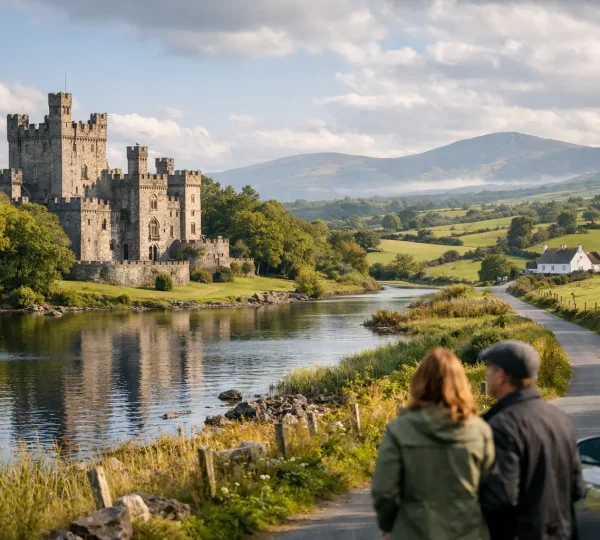
That does not mean every day needs to be spent in archives or old cemeteries. Far from it. The best heritage itineraries blend personal research with the Ireland you came to enjoy – coastal drives, castles, music, gardens, good meals, and the kind of local storytelling that brings history to life.
How to build an Ireland heritage trip around real places
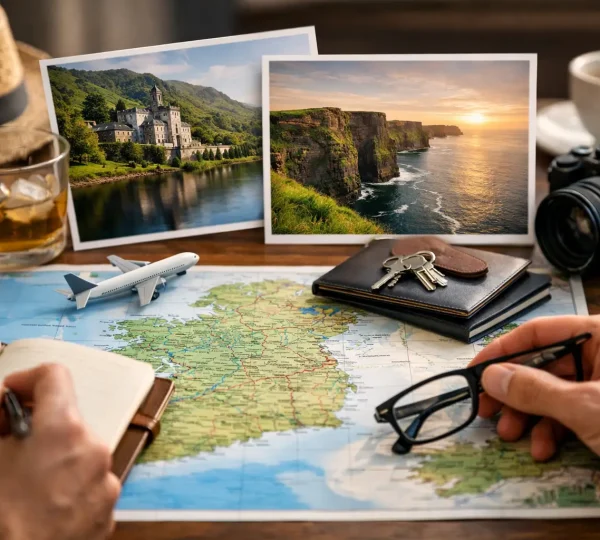
Once you have identified the strongest family links, the next step is to narrow the geography. This matters more than most visitors expect.
Ireland may look compact on a map, but heritage travel is rarely efficient if you are zigzagging from Kerry to Belfast to Wexford in search of every possible ancestor. Driving times add up, and the emotional pace of the trip can get lost in constant movement. A better approach is to choose one or two key regions and build outward from there.
If your family roots are concentrated in the southwest, for example, you might combine Cork and Kerry with time in Killarney, the Ring of Kerry, and a private visit to a local heritage center. If your connections are in Ulster, then counties like Donegal, Derry, Antrim, and Tyrone may shape the route. The point is to let ancestry guide the backbone of the trip, while the surrounding days add texture and enjoyment.
This is also where local knowledge becomes invaluable. Townland names change. Family stories are sometimes inaccurate by a county or two. Places that seem close on paper may not fit neatly into a comfortable day. A well-planned private itinerary saves you from spending half the vacation trying to solve logistics.
Decide what kind of heritage experience you want
Not every traveler means the same thing by heritage. For some, it is a serious genealogy trip with records, archives, and local researchers. For others, it is more about cultural connection – walking through the landscape their ancestors knew, hearing the history of the famine years, visiting emigrant ports, or attending traditional music in the county where the family began.
Both approaches are valid, and many of the best trips combine them.
If your goal is research-driven, plan for time that is flexible. Records offices, local libraries, parish contacts, and cemetery visits do not always run on a neat touring schedule. Some discoveries happen quickly. Others lead nowhere. That is part of the reality, and it helps to build a trip that can adjust without stress.
If your goal is emotional connection, then the itinerary may lean more toward storytelling and place. Visiting Cobh, for instance, can mean more when your family left through Cork Harbor. Walking quiet country roads in Roscommon or Galway can matter just as much as finding a formal record. Heritage is not always paperwork. Sometimes it is the feeling of recognition in a landscape.
Balance heritage stops with the Ireland you came to enjoy
This is where many trips either become too heavy or too shallow. Too much genealogy, and the vacation can begin to feel like a search mission. Too little, and the heritage element feels token.
A good balance is often one meaningful heritage focus each day, with the rest of the day shaped around scenic or cultural experiences nearby. If you are visiting an ancestral parish in the morning, spend the afternoon at a stately home, a coastal viewpoint, or a village known for music and food. If a family graveyard visit is likely to be emotional, leave room afterward for a relaxed lunch and a gentle drive rather than another packed schedule.
This kind of pacing matters, especially for multigenerational families. One person may be deeply invested in tracing a surname, while another simply wants to enjoy Ireland in comfort. A strong itinerary respects both.
Give yourself enough time
If you want the honest answer to how to build an Ireland heritage trip, it is this – do not rush it.
A heritage journey usually needs more breathing room than a standard first-time Ireland vacation. You are not just checking landmarks off a list. You are moving through places with personal significance, and those moments are difficult to schedule to the minute.
For one region with a strong ancestral focus, five to seven days can work very well. If you want to include multiple counties, iconic touring, and time to enjoy cities like Dublin or Galway, then a longer itinerary makes more sense. Ten to fourteen days gives you the freedom to travel at a more comfortable pace, with room for detours, conversations, and unexpected discoveries.
That flexibility is often the difference between a trip that feels meaningful and one that feels hurried.
Choose comfort over complexity
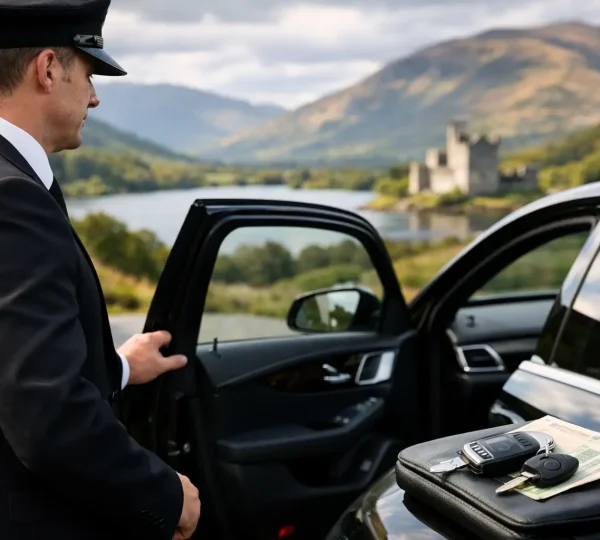
Heritage travel sounds romantic, and often it is, but it can also involve country roads, hard-to-find locations, and sites that are not set up like major tourist attractions. That is one reason many travelers, especially couples, families, and older adult groups, prefer not to self-drive.
When someone else is handling the route, timing, and day-to-day adjustments, you are free to be present for the experience itself. You can listen to local stories, stop when something catches your eye, and spend more time at the places that matter most to your family.
That is especially valuable if your itinerary includes a mix of well-known highlights and lesser-known heritage locations. A private driver-guide can bridge both worlds with far less friction than trying to manage it all yourself.
Build in local context
Family history means more when it is placed inside Irish history.
A parish visit becomes richer when you understand what that county lived through in the famine era. A surname search carries more weight when you hear about land changes, emigration patterns, or the political history of the region. Even a simple stop in a village pub can take on new meaning when someone local explains how families lived, worked, worshipped, and left.
This is where the trip stops being a document hunt and becomes something more human. You are not only tracing people. You are beginning to understand the world they knew.
Keep expectations realistic, but keep your mind open
Not every heritage trip ends with a dramatic discovery. You may not find the exact cottage. You may not confirm every branch of the family tree. Records may be incomplete, and family lore may turn out to be only half right.
That does not mean the journey has failed.
Some of the most memorable moments come from smaller things – finding the right churchyard, meeting someone who knows the local family name, hearing your ancestral place pronounced properly for the first time, or simply standing in a landscape that suddenly feels familiar. Heritage travel is as much about connection as proof.
Let the itinerary feel personal
The best heritage trips do not read like generic touring plans. They reflect the family behind them.
One itinerary may center on emigrant history in Cork and finish with a few days in Killarney. Another may weave ancestral research in the north with the Giant’s Causeway, Belfast, and Donegal’s coastal beauty. Another may be built around a surname trail, family homesteads, and time with cousins still living locally.
That is why a tailored approach matters. Creagh Travel often sees that the most successful private tours are the ones shaped around the traveler rather than squeezed into a standard route. Heritage travel, more than any other kind, deserves that level of care.
If you are building this kind of journey, start with what you know, stay open to what you may learn, and give the trip enough space to become something more than sightseeing. Ireland has a way of making family history feel close again – especially when you travel through it with time, comfort, and the right local insight.