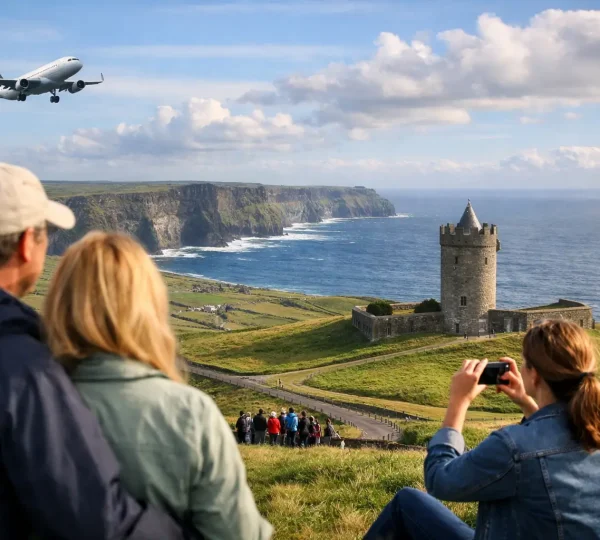

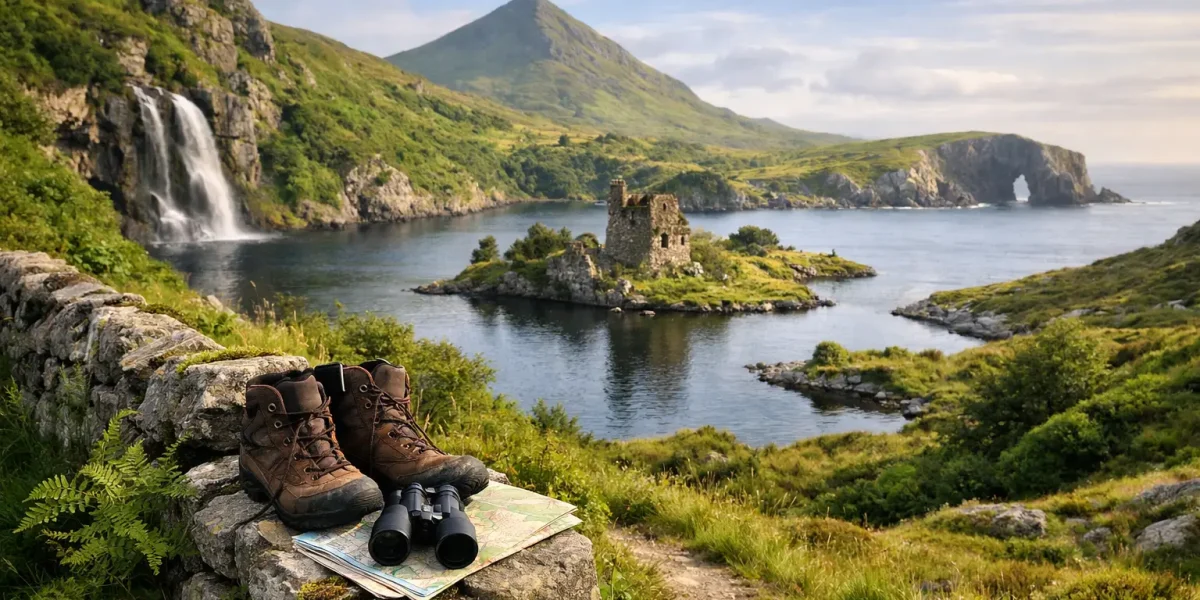
You can stand at the Cliffs of Moher with a hundred other visitors and still feel the thrill. But ask most people what they remember most from Ireland a year later, and it is often the smaller moment – the village pub with live music, the ruined abbey with no ticket line, the coastal road they would never have found alone. That is where a hidden gems in Ireland tour earns its keep.
The appeal is not that famous places are overrated. Many of them deserve every bit of praise they get. The real difference is balance. A well-planned private journey gives you the headline sights and the quieter places that make the country feel personal, layered, and wonderfully alive.
What makes a hidden gems in Ireland tour worth doing?
A hidden-gems itinerary is not just a list of obscure stops. If it is done badly, it can feel like a long drive to places that are quiet for a reason. The best version is more thoughtful than that. It mixes the iconic with the less expected, so each day has contrast – a famous peninsula followed by a tucked-away beach, a major castle followed by lunch in a market town where locals still know one another by name.
That matters especially for American visitors who want to see a lot without feeling rushed. Ireland looks compact on a map, but road time, weather, and narrow rural routes can change the day quickly. Hidden places are often the most rewarding, but they also take local judgment. Some are best in the morning light. Others only shine if paired with the right nearby stop. A private tour works well here because it leaves room to adjust.
The hidden side of Ireland is different in every region
Ireland does not keep its best lesser-known places in one corner. They are scattered across the country, and each region offers a different kind of surprise.
Southwest Ireland – beyond the postcard views
County Kerry and West Cork draw visitors for good reason, but the real pleasure often sits just off the main route. Everybody knows the Ring of Kerry. Fewer travelers linger in smaller heritage towns where shopfronts are colorful, the seafood is first-rate, and the pace softens immediately once the day-trippers move on.
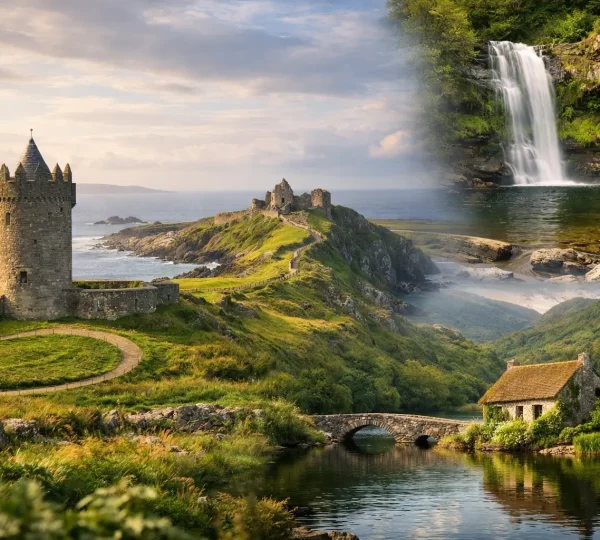
In West Cork, hidden gems are rarely flashy. They are peninsulas with winding roads and sea views that seem to go on forever. They are stone circles in open fields, tiny harbors, and gardens tucked behind old walls. This part of Ireland rewards people who are happy to slow down. If you want dramatic scenery without constant crowds, it is one of the strongest choices in the country.
The north – rich history, fewer clichés
Northern routes often surprise first-time visitors. They may arrive expecting the Giant’s Causeway and little else, then leave talking about walled cities, coastal glens, and manor houses with remarkable stories. The north has a little more edge to it in the best sense. The history is deep, the landscapes are bold, and the sense of place is strong.
Donegal, in particular, feels like a secret that has somehow stayed a secret. It offers mountain passes, lonely beaches, and villages where traditional music still feels like part of ordinary life rather than a performance for tourists. It is not the easiest part of Ireland to tackle on a rushed schedule, which is exactly why it works so well for a custom tour.
The midlands and east – overlooked for no good reason
Many visitors pass straight through the midlands on the way west. That is a mistake. This is where you find monastic ruins, grand estates, gardens, lakelands, and some of the country’s most interesting heritage stops without the crowds that gather in the more heavily marketed regions.
The east also offers hidden depth beyond Dublin. Smaller coastal towns, mountain drives, and early Christian sites can add real texture to an itinerary. If your trip starts or ends in the capital, these places are easy to fold into the journey without adding strain.
Hidden gems in Ireland tour stops that genuinely add value
Not every quiet place is worth your time, so the question is not simply where to go. It is what kind of stop improves the overall trip.
One category is the scenic detour that feels accidental but memorable – a beach reached by a narrow lane, a lookout above a harbor, or a valley road that suddenly opens into something spectacular. These moments are hard to plan from a guidebook because they depend on timing, weather, and local knowledge.
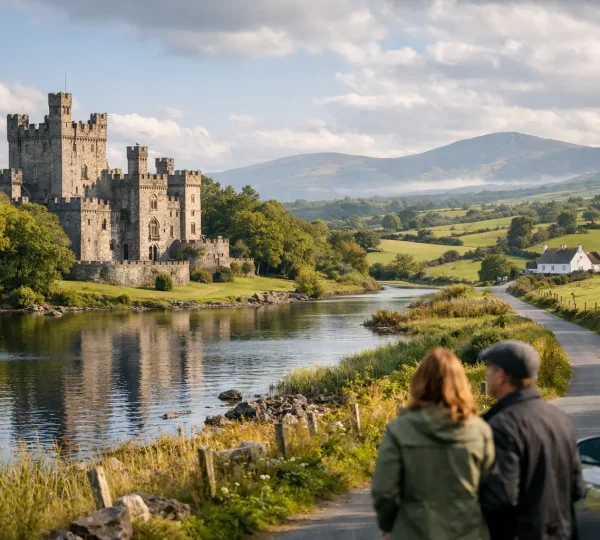
Another is the story-led stop. A small abbey, famine-era site, family castle, or village museum can be far more affecting than a bigger attraction if it is introduced properly. Context changes everything. With the right guide, a ruin is no longer just an old wall in a field. It becomes part of the larger Irish story your trip is slowly building.
Then there is the food stop, which should never be underestimated. Some of the finest memories in Ireland come from a chowder lunch in a fishing town, brown bread still warm from the kitchen, or a pub where the welcome is as good as the meal. Hidden gems are not only landscapes and monuments. Sometimes they are tables.
Why private touring works better for lesser-known places
A coach tour is efficient for major landmarks, but it is rarely built for flexibility. Hidden gems need flexibility. They ask for an extra half hour here, a change of order there, or the common sense to skip a stop when fog has swallowed the view.
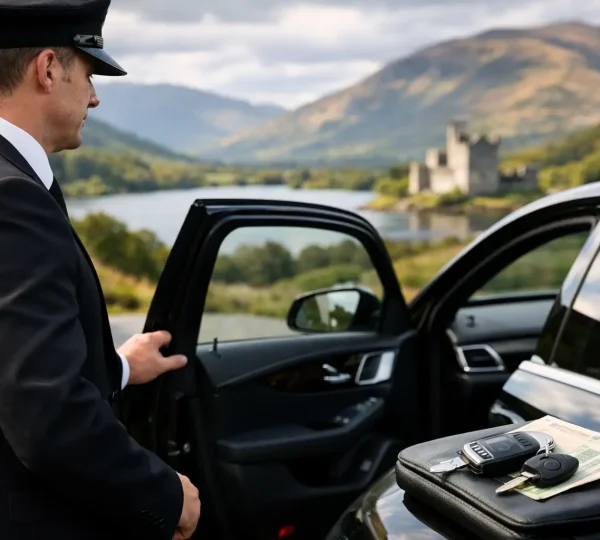
That is where a chauffeur-led private tour changes the experience. You are not managing rural directions, parking, or whether the road ahead is suitable for your comfort level. You can spend more time looking out the window and less time wondering if your phone signal is about to disappear. Better still, your day can reflect your interests.
For some travelers, that means genealogy and heritage. For others, it means gardens, golf, whiskey, or traditional music. A couple celebrating an anniversary may want beautiful hotels and long scenic lunches. A family group may care more about mixed pacing and easy walking. Hidden gems are not one-size-fits-all. They work best when chosen for the people actually taking the trip.
How to build a smarter itinerary
The biggest mistake travelers make is trying to cram too many out-of-the-way places into one route. Hidden stops are meant to enrich the day, not turn it into a marathon. Two excellent lesser-known visits, paired with one major highlight, usually feel better than chasing six minor ones across three counties.
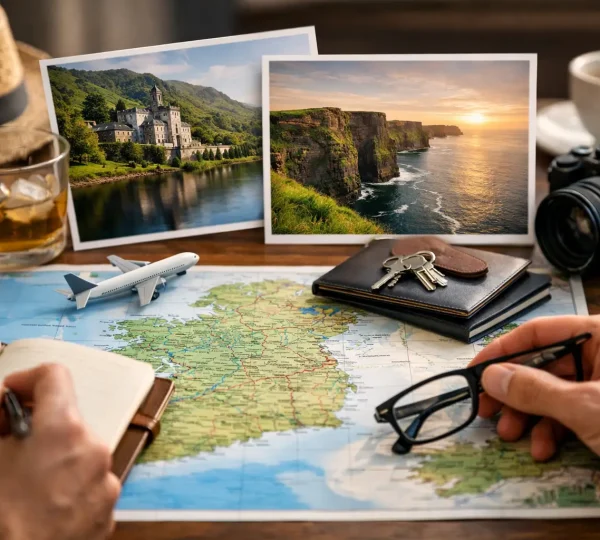
It also helps to think in clusters. If you are touring the southwest, build around a region rather than trying to leap from Kerry to Connemara to Donegal in a handful of days. Ireland is best enjoyed with some breathing room. The roads can be slower than expected, and part of the pleasure is having time for the unplanned stop that turns into the best part of the afternoon.
Season matters too. Summer brings longer days and lively towns, but also fuller roads and busier attractions. Spring and early fall often suit a hidden gems in Ireland tour beautifully. You still get good touring conditions, but the quieter atmosphere makes smaller places feel even more special.
What first-time visitors often get wrong
Many first-time visitors think “hidden” should mean completely unknown. In practice, that is not always desirable. Some places are little-known because they are magical. Others are little-known because they are difficult to access, poorly timed for your route, or simply less compelling than they sound online.
A good itinerary does not chase obscurity for its own sake. It selects places that are authentic, enjoyable, and realistic within the pace of your trip. There is also no shame in pairing hidden gems with famous stops. Seeing the Book of Kells or the Cliffs of Moher does not make your trip less original. It just means you are seeing Ireland properly, in full range.
This is also where a company like Creagh Travel can make the difference between a nice vacation and a genuinely personal one. The value is not just transport. It is knowing which quiet places are worth the turnoff, which hotel fits your style, where to eat after a long scenic drive, and when to change the plan because the day is asking for something better.
The best hidden gem is often the feeling
People sometimes ask for a list of secret places, as if the right answer can be pinned neatly to a map. Ireland does not really work that way. The most memorable hidden gem may be a conversation with a local historian, a lane lined with fuchsia, a castle ruin at golden hour, or a pub where someone starts singing before dessert arrives.
That is why the best tours are curated, not crowded. They leave enough room for serendipity while quietly stacking the odds in your favor. If you want Ireland to feel less like a checklist and more like a story you were lucky enough to step into, the quieter roads are usually the right place to start.