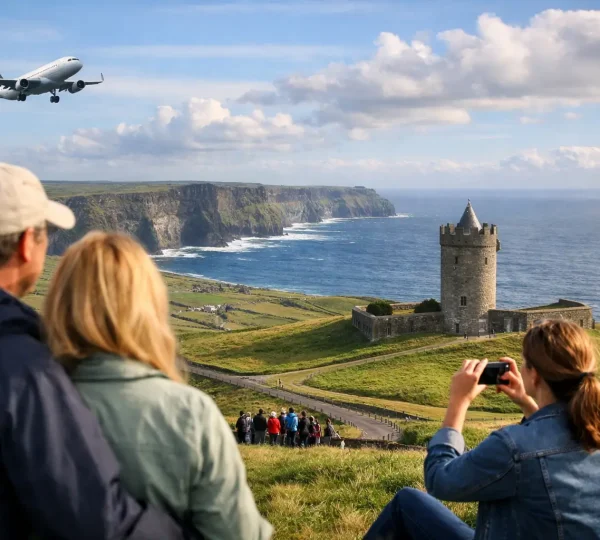

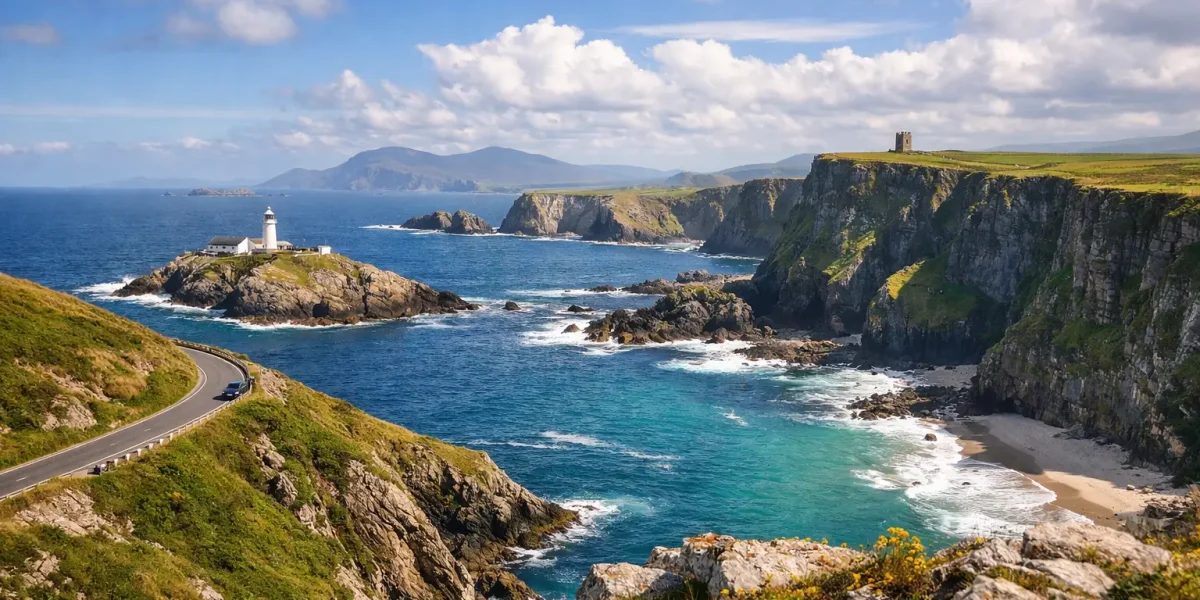
The road can change quickly on Ireland’s west coast. One minute you are looking at a polished harbor with fishing boats bobbing in the tide, and the next you are standing above a cliff edge with the Atlantic throwing itself at the rocks below. That is exactly why choosing the best stops on Wild Atlantic Way matters. It is not just about seeing the famous places. It is about building a route that feels varied, comfortable, and unmistakably Irish from start to finish.
For many visitors from the US, the challenge is not finding places worth seeing. It is narrowing them down. The Wild Atlantic Way stretches for well over 1,500 miles, and trying to do everything usually means too much time in the car and not enough time enjoying the place itself. The best itineraries balance headline sights with villages, viewpoints, food stops, and quieter moments that give the journey its character.
How to choose the best stops on Wild Atlantic Way
A good Wild Atlantic Way trip is rarely about ticking off the most pins on a map. It depends on your pace, your interests, and how much driving you want in a day. If you love dramatic scenery, counties Clare, Kerry, and Donegal will likely give you the biggest visual payoff. If you are after music, pub culture, and an easygoing village atmosphere, Galway and Mayo have enormous appeal.
There is also a practical side. Some stops are best for a short photo break, while others deserve half a day or an overnight stay. Cliffs, peninsulas, islands, and national parks can be unforgettable, but they can also add time. That is where local planning makes a difference. A route that looks sensible on paper can feel rushed once you factor in narrow roads, weather shifts, lunch, and the temptation to stop every ten minutes for another view.
12 best stops on Wild Atlantic Way
Kinsale
Kinsale is one of the gentlest ways to begin a west coast journey. The harbor setting is lovely, the streets are colorful, and the town has a polished but welcoming feel. It is a fine first stop for travelers who want to settle into Ireland without being dropped straight into rugged isolation.
It also punches above its weight for dining. If your ideal trip includes long lunches, seafood, and a stroll afterward, Kinsale sets the right tone. It is less about raw Atlantic drama and more about atmosphere, which is precisely why it earns its place.
Mizen Head
If you want to feel the edge of Europe, Mizen Head delivers. The cliffs are stark, the sea is restless, and the old signal station gives the whole place a sense of human grit against the elements. It feels remote in the best possible way.
This is the kind of stop that stays with people because it is not manicured or overly softened for visitors. On a clear day it is thrilling. On a gray day it can feel almost theatrical. Either way, it reminds you that the Wild Atlantic Way is not meant to be tame.
Killarney National Park
Some travelers wonder whether Killarney is too popular to count as one of the best stops on Wild Atlantic Way. The honest answer is no. It is popular because it is genuinely beautiful and remarkably easy to enjoy. Lakes, mountains, woodland, and historic sites all sit within reach, which makes it ideal for travelers who want variety without constant packing and unpacking.
It is also one of the best places to slow the pace. After longer scenic drives, Killarney offers comfort, good hotels, and a strong sense of arrival. For private touring, it works especially well because you can pair iconic sights with quieter corners away from the busiest spots.
Slea Head Drive
On the Dingle Peninsula, Slea Head is one of those routes where the journey is the attraction. Stone walls, green fields, sudden sea views, and offshore islands give it a cinematic quality, but it still feels lived in and local rather than staged.
You do not rush Slea Head. You stop for viewpoints, early Christian sites, beaches, and maybe a coffee or a pint back in Dingle town. It is one of the best examples of why a chauffeur-led day can be such a pleasure. Someone else handles the bends and the road etiquette while you enjoy the landscape properly.
Cliffs of Moher
Yes, they are famous. Yes, they can be busy. They are still worth it. The Cliffs of Moher have scale that photos never quite capture, and when the light behaves, the whole coastline seems to stretch into infinity.
The trade-off is timing. Midday in peak season can be crowded, and that can flatten the experience. Arrive earlier or later, and the cliffs feel far more spacious and dramatic. This is a perfect example of a stop that benefits from smart planning rather than being skipped for the sake of originality.
The Burren
The Burren surprises people. It does not look like the green Ireland many visitors imagine, and that is exactly its charm. This limestone landscape feels ancient, strange, and deeply atmospheric, with wildflowers, stone walls, and traces of human history all layered together.
It works best if you let someone explain it. Without context, it can seem barren at first glance. With the right storytelling, it becomes one of the most fascinating regions in the country. Pairing the Burren with the Cliffs of Moher usually makes for a very strong day.
Galway City
Not every memorable stop on the Wild Atlantic Way is about scenery. Galway gives you music, energy, and a social pulse that can be a welcome contrast after days of coastal driving. The streets are lively, the food scene is strong, and there is always a sense that something is about to happen.
For many American visitors, Galway feels immediately accessible. It is easy to enjoy without much effort, but it still has plenty of character. It also works well as a base if you want day trips into Connemara while returning to comfort and good dining in the evening.
Connemara
Connemara has a mood all its own. The landscapes are open and windswept, the mountains rise unexpectedly, and the light can shift from silver to gold in minutes. It is less polished than some parts of Kerry, and that is exactly why many travelers fall for it.
This is a region for those who like their scenery with a bit of solitude. It rewards patience and a flexible schedule. On a bright day it is stunning. On a misty one, it can feel mysterious and romantic. Either version is memorable.
Kylemore Abbey
Kylemore Abbey offers a softer kind of beauty. Set against lakes and mountains, it gives the west of Ireland a touch of elegance alongside the wildness. For travelers who enjoy history, gardens, and a more reflective stop, it works beautifully.
It is especially good in an itinerary that needs balance. Too many cliff-top viewpoints can start to blur together. Kylemore changes the rhythm and adds another side of Ireland’s story.
Achill Island
Achill often feels like a favorite people did not expect. The beaches are broad, the sea is vivid, and the island has that satisfying sense of being slightly apart from the mainland. Keem Bay, in particular, is one of those views that tends to silence a car for a moment.
It is best for travelers who do not mind a little extra road time in exchange for a more remote feel. If your idea of a great day is big scenery without heavy crowds, Achill deserves serious consideration.
Slieve League
Donegal’s Slieve League cliffs are among the highest sea cliffs in Europe, and they carry a scale that feels genuinely awe-inspiring. They are less internationally famous than the Cliffs of Moher, which can make the experience feel more personal and less staged.
Donegal in general asks for more commitment because distances can be longer, but the payoff is huge. For travelers who have already seen parts of Ireland or want a route with a wilder edge, Slieve League can become a standout memory.
Malin Head
At the northern tip of the island, Malin Head feels elemental. The land is exposed, the weather can turn quickly, and the views have a raw power that suits the end of a coastal journey. It is not about shops or polished visitor experiences. It is about standing in a place that feels far from the everyday.
For some itineraries, Malin Head is too far to include. That is the truth of it. But if your route takes you deep into Donegal, it is a thrilling final flourish.
Making your route work in real life
The best Wild Atlantic Way itinerary usually includes fewer stops than people first imagine. Trying to cram Cork, Kerry, Clare, Galway, Mayo, Sligo, and Donegal into one short trip can turn a dream vacation into a moving vehicle with scenic interruptions. Three or four regions, done properly, often feel richer than racing through six.
Comfort matters too. A great route should leave room for a proper lunch, a wander through a town, a spontaneous stop at a lookout, and the kind of local conversation that never appears on a printed schedule. That is often where the real Ireland appears. Creagh Travel builds around that idea, shaping the day to the travelers rather than forcing the travelers to keep up with the day.
If it is your first visit, Kerry, Clare, and Galway make a strong introduction. If you want something more off the beaten path, add Mayo or Donegal. If you love golf, heritage, or gardens, the route can shift again. The west coast rewards customization because no two travelers want exactly the same trip.
The finest stops on the Wild Atlantic Way are not always the ones with the biggest reputation. They are the places that fit your pace, your interests, and the kind of memories you want to bring home. Get that balance right, and the road stops feeling like a checklist and starts feeling like Ireland itself.